


Website Publisher!

When Power Becomes the Problem

Laptops are powerful, fast, and endlessly capable. They run dozens of apps, manage complex workflows, and keep work moving. But for tasks that require deep thinking—strategy, planning, problem-solving, and reflection—that power often becomes a liability.

Every open tab competes for attention. Notifications interrupt thought. Interfaces invite multitasking. Instead of staying with a problem, the mind is pulled into emails, messages, and updates. Work gets done, but thinking suffers.

Laptops vs Focused Work Devices: A Cognitive Comparison

Laptops excel at execution. Focused devices excel at thinking.

Feature

Core design

Distraction level

Cognitive load

Thinking depth

Task switching

Idea development

Creativity support

Mental fatigue

Laptops

Multi-purpose computing

High

Heavy

Frequently interrupted

Constant

Fragmented

Tool-driven

High

Focused Work Devices

Single-purpose focus

Minimal

Light

Sustained

Rare

Continuous

Thought-driven

Lower


Why Laptop Alternatives Are Essential for Deep Thinking

How Professionals Use Laptop Alternatives for Thinking-Heavy Tasks

This shift isn’t about rejecting laptops—it’s about using the right tool for the right kind of work.

Strategy and Planning

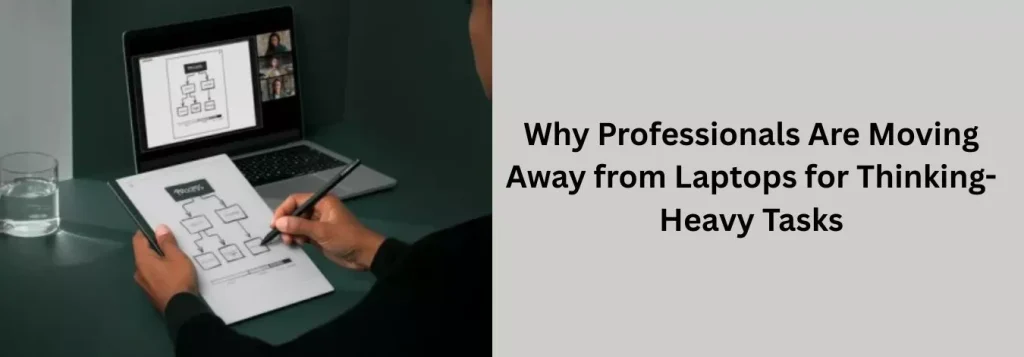
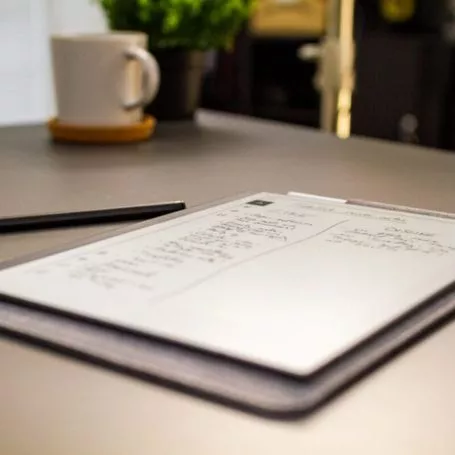
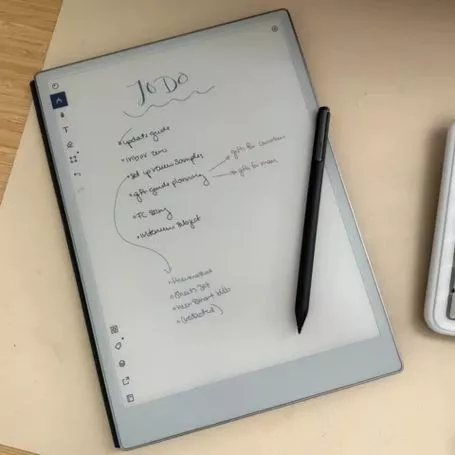
Instead of planning inside spreadsheets or documents, professionals map ideas freely writing, sketching, and reorganizing thoughts without templates or formatting constraints.

Problem-Solving and Analysis

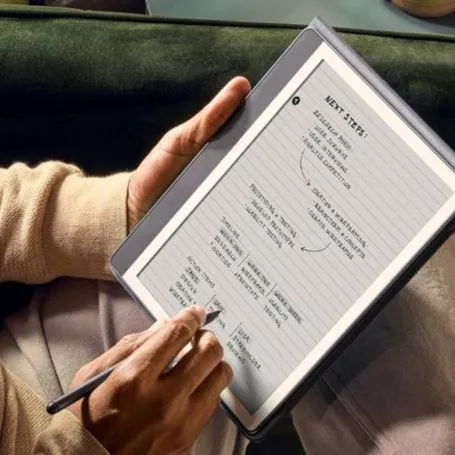
Focused devices allow users to explore problems visually, test assumptions, and work through complexity without interruptions breaking mental flow.

Brainstorming and Idea Development

Without apps or notifications, ideas unfold organically. Thoughts connect, evolve, and deepen instead of being prematurely structured.

Reflection and Decision-Making

Slower input methods encourage reflection. Writing things out reveals inconsistencies, clarifies priorities, and leads to more confident decisions.

Separating Thinking From Execution

Many professionals now think on focused devices, then move to laptops only when it’s time to execute—emails, presentations, and delivery.

What Professionals Are Saying

Rated 5 out of 5
“I think more clearly away from my laptop.”

— Andrew S.
Management Consultant
Rated 5 out of 5
“My best ideas don’t happen in documents.”

— Claire D.
Product Leader
Rated 5 out of 5
“I separate thinking time from execution time now.”

— Luis M
Startup Operator

Conclusion

Laptops are unmatched for execution but they’re not optimized for deep thinking. For strategy, planning, and complex problem-solving, many professionals are choosing alternatives that prioritize focus over functionality. By moving thinking-heavy work away from laptops, professionals reclaim attention, clarity, and depth. The result isn’t less productivity—it’s better thinking. In a world of powerful computers, the most valuable tool may be the one that does less and lets the mind do more.
