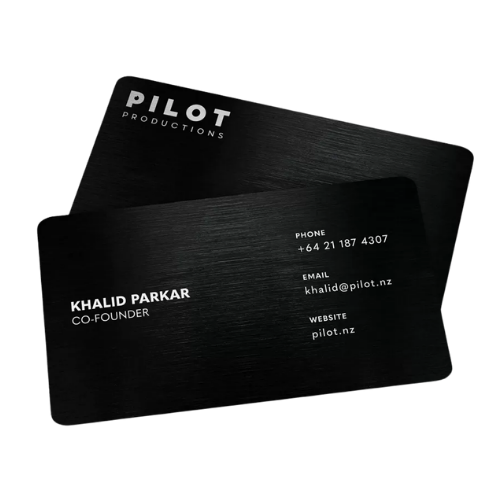
Are 0.03-Inch Black Aluminum Business Cards Worth the Higher Cost?
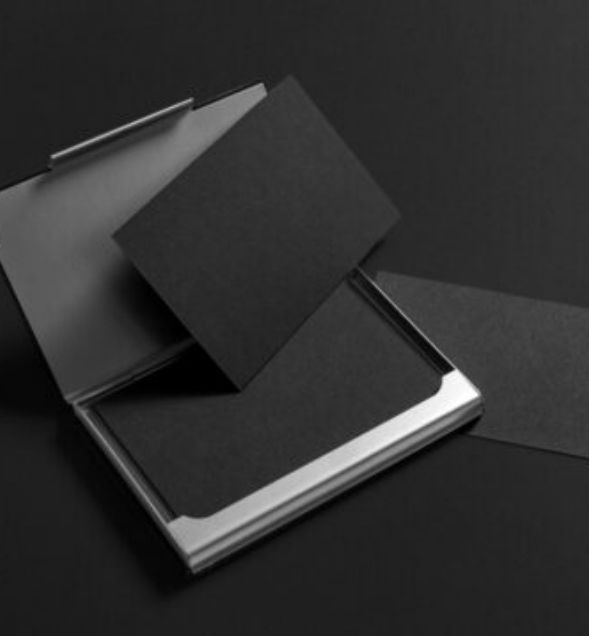
Paper business cards die in a wallet the way gym memberships die in January — fast, quietly, and without much dignity. These 0.03-inch black aluminum cards trade that fate for laser-engraved permanence. Here’s whether metal actually earns its keep, or if it’s just a fancier way to get thrown in a drawer.
Understanding the Difference Between UV Printing and Print-and-Cut
A paper card costs pennies because paper is, essentially, dressed-up trash by design. It’s meant to be disposable. A 0.03-inch aluminum card starts as raw metal stock, gets precision-cut, and finished in matte black — closer to manufacturing a tiny plaque than printing a flyer, and the price reflects that shift.
That price difference isn’t padding, it’s survival insurance. Paper folds, tears, and fades into obscurity within weeks of meeting a wallet. Aluminum shrugs all of that off, which quietly changes what “cost per card” even means once you stop measuring in weeks and start measuring in years.
The 0.03-inch thickness is the Goldilocks zone. Go thinner and the card flexes like a sad crisp. Go thicker and you’ve basically handed someone a dog tag. This gauge feels substantial in hand without turning your business card into something that sets off airport security.
The xTool 0.03" Black Aluminum Business Cards Up Close
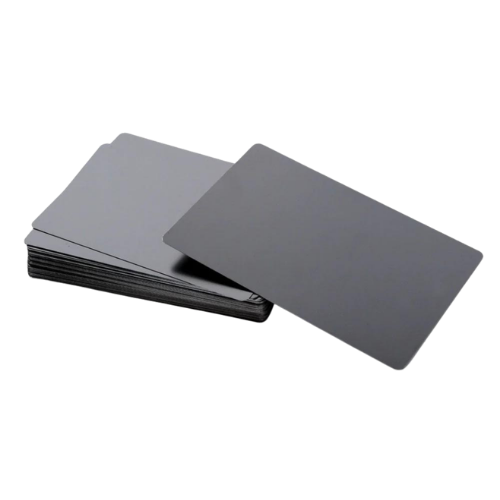
Fifteen cards per pack, sized 2.1 by 3.4 inches to fit any standard wallet or card holder without awkward overhang. The matte black finish arrives engraving-ready, no priming or coating required, and works across CO2, diode, infrared, fiber, MOPA, and UV lasers straight out of the box.
Engraving Quality on a Black Finish
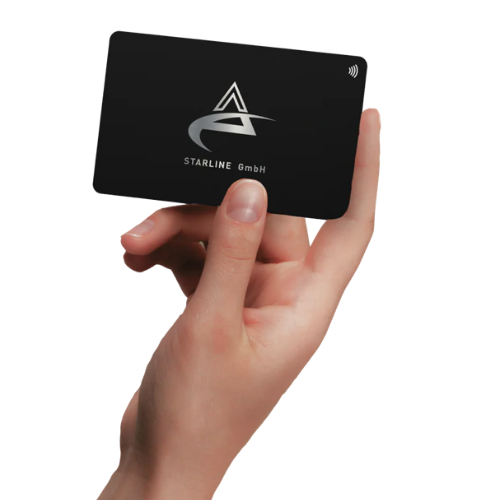
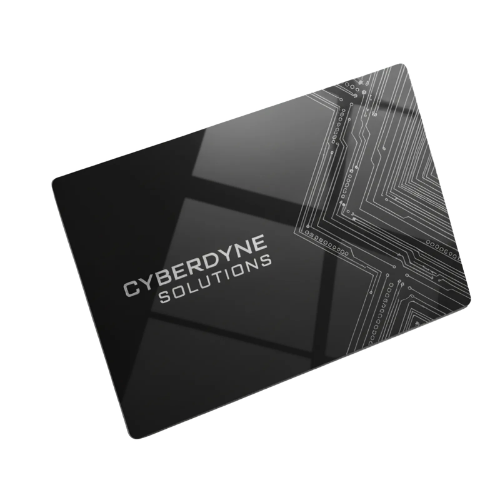
Black anodized aluminum is basically a magic trick for laser engraving: the moment you cut through it, a lighter raw-metal tone appears underneath, creating contrast most printers can only dream about. Fine text, tight QR codes, and thin logo lines all read cleanly, even at sizes that would blur into mush on paper.
This is where the price tag stops feeling like a tax and starts feeling like an investment. Ink fades, smudges, and occasionally decides your name looks better half-missing. Laser-etched metal doesn’t negotiate — the mark is permanent, sharp, and completely indifferent to coffee spills or a summer in someone’s back pocket.
Surviving the Real World: Wallets, Pockets, and Bad Decisions
A paper card starts looking sad after one washing machine incident. Metal doesn’t flinch. Aluminum resists corrosion, doesn’t warp from heat or humidity, and shrugs off the general chaos of being crammed into a wallet next to receipts, loose change, and whatever else lives in there.
The one thing to actually watch is edge quality. A clean laser cut leaves smooth, deburred edges that feel fine against skin and fabric. A sloppy cut leaves sharp corners that snag on pockets, so it’s worth checking edge finish on a sample before committing an entire batch to production.
Most paper cards get glanced at, maybe photographed, then quietly deleted from existence by the end of a networking event. A metal card that survives years in a wallet keeps your contact details physically alive long after the free drinks and forced small talk are a distant, slightly cringey memory.
For real estate agents, consultants, or anyone selling trust before selling anything else, handing over metal instead of paper does some of the pitching for you before you’ve said a word. That silent status signal is hard to price precisely, but businesses that use it rarely go back to cardstock.
Starting at $8.99 for a pack of 15, the entry price sits well above paper, no argument there. But order 51 packs or more and it drops to $6.29 per pack, which is a meaningfully different conversation for anyone producing these at scale rather than buying one pack for personal use.
That pricing curve is built for engraving businesses, not solo networkers. A shop buying in bulk, engraving in batches, and reselling finished cards captures margin that a single buyer never touches, which makes the “higher cost” argument mostly irrelevant once volume enters the picture.
Trade show giveaways and mass handouts are where metal cards go to be wasted. Even at bulk pricing, the cost per unit still beats paper by a wide margin in the wrong direction, and giveaway cards rarely survive long enough for durability to matter to anyone who picked one up.
The thinner 0.03-inch gauge also isn’t the best fit for dense, double-sided designs at full power, since repeated heavy passes can introduce slight warping. If your design calls for heavy detail on both faces, it’s worth running a test pass before committing an entire batch to the idea.
For client-facing professionals and personalization businesses selling premium cards, the cost earns its place easily. Durability, sharp black-on-metal contrast, and near-universal laser compatibility mean the card keeps working long after a paper equivalent would’ve been recycled, lost, or used as a coffee coaster by accident.
For anyone printing purely for one-time, high-volume handouts, paper still wins on pure economics. Metal isn’t built to be disposable, and paying a premium for durability nobody sticks around to benefit from misses the entire point of upgrading in the first place.
Between the bulk pricing curve and the way black finish turns every engraving into a small flex, xTool has built a card that scales well for shops treating this as an actual product line, not a stationery afterthought. Match the format to the use case, and the “higher cost” mostly answers itself.