




Website Publisher!

When Digital Tools Interrupt Thinking

Modern planning happens inside tools built for execution, not thinking. Tabs multiply. Notifications interrupt. Templates dictate structure before clarity exists. Calendars, task managers, and documents are excellent for organizing outcomes—but poor environments for forming strategy.

Ideas get fragmented across apps. Strategic thinking is constantly paused by pings, links, and formatting decisions. Instead of staying with the problem, attention is pulled elsewhere.

Traditional Digital Planning vs Digital Paper: A Strategic Comparison

Most digital tools optimize for speed and structure. Digital paper optimizes for focus and clarity especially in early-stage thinking.

Feature

Attention

Thinking flow

Structure

Idea development

Strategic clarity

Cognitive load

Planning depth

Review & reflection

Traditional Digital Planning Tools

Constant interruptions

Frequently broken

Predefined (templates, fields)

Fragmented across tools

Forced too early


High (menus, options)

Execution-focused

Linear and rigid

Digital Paper

Distraction-free

Continuous

Emergent and flexible

Unified in one space

Allowed to evolve

Low

Thinking-focused

Visual and intuitive

Why Digital Paper Is Essential for Strategic Planning

How Digital Paper Supports Strategic Thinking

Digital paper isn’t about replacing tools—it’s about creating space before tools are needed.

Planning Without Notifications

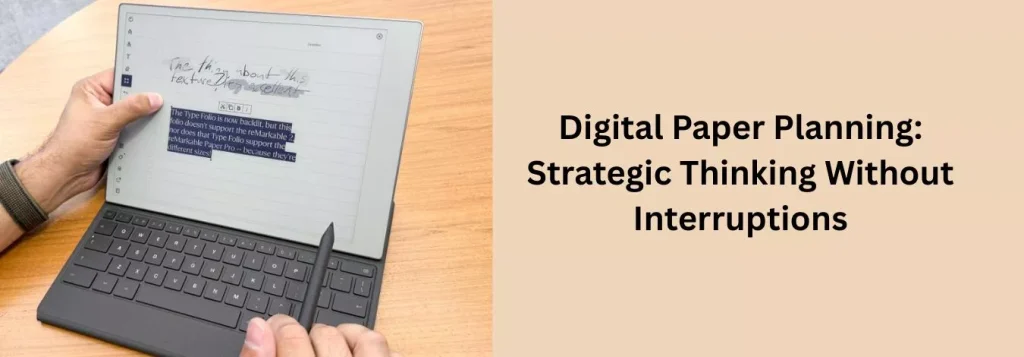
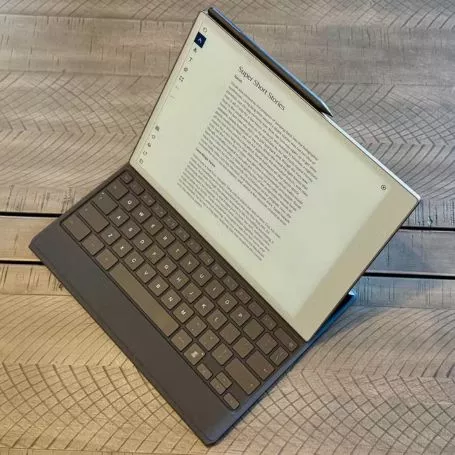
Digital paper devices are designed to eliminate interruptions. No emails, no messages, no pop-ups. This creates a rare environment where strategic thought can unfold without being reset every few minutes.

Thinking Before Structuring

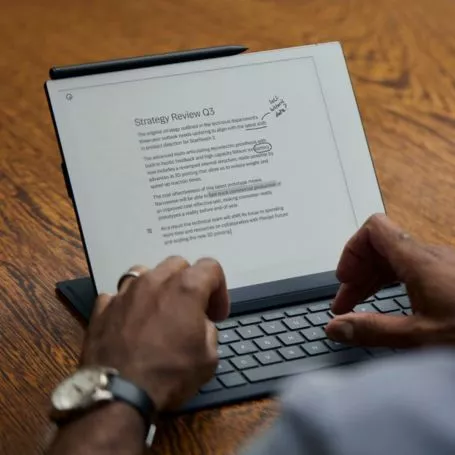
Instead of starting with a template or framework, planners begin with raw thinking—questions, sketches, priorities, and uncertainties. Structure emerges after clarity, not before.

Visual Strategy Development

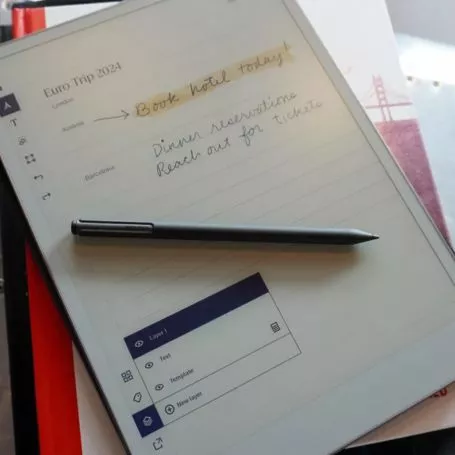
Strategic planning is rarely linear. Digital paper allows diagrams, arrows, layers, and annotations—supporting systems thinking and revealing connections that typed lists often hide.

Holding Complexity Without Fragmentation

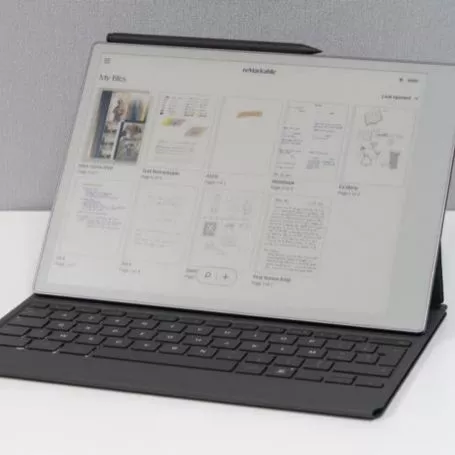
Long-term planning involves competing goals, unknowns, and evolving assumptions. Digital paper keeps everything in one continuous space, making it easier to hold complexity without splitting attention across tools.

Reflecting and Refining Over Time

Because plans are saved and revisitable, strategic thinking becomes iterative. Leaders can return to earlier assumptions, track how thinking evolved, and refine decisions instead of restarting from scratch.

What Planners and Leaders Experience

Rated 5 out of 5
“I can finally think without being interrupted.”

— Rachel M.
Strategy Director
Rated 5 out of 5
“My planning feels clearer before it becomes formal.”

— James L
Operations Lead
Rated 5 out of 5
“I sketch ideas instead of forcing them into boxes.”

— Elena P.
Product Strategist

Conclusion

Strategic thinking doesn’t need more tools; it needs fewer interruptions. Digital paper creates a planning environment where ideas can form fully before being shaped into action. By removing notifications, rigid structures, and interface noise, it restores the conditions required for clear, deliberate thought. Planning on digital paper isn’t about doing more. It’s about thinking better—without interruption, without fragmentation, and without rushing clarity. In a distracted world, uninterrupted thinking becomes a strategic advantage.
