Metallic Mesh vs Clear Iridescent Acrylic: Which Premium Sheet Should You Buy?
Two premium acrylic sheets, two completely different finished looks, and a decision that comes down to what you’re actually cutting and how you’re processing it. This comparison breaks down where metallic mesh and clear iridescent acrylic each pull ahead, and which one fits your next project better.
- 22nd June
- Eliza Bramwell
What Makes These Two Sheets "Premium" in the First Place
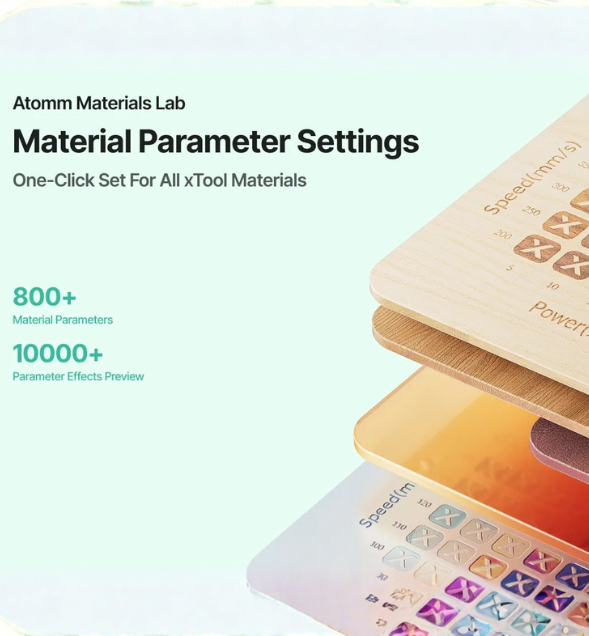
Standard acrylic sheet gives you one flat color and calls it a day. Both of these sheets do more: metallic mesh delivers a reflective, textured metal-look finish, while clear iridescent shifts color and light depending on the angle it’s viewed from, which is exactly why both command a higher price than basic stock.
That price difference isn’t arbitrary. Metallic mesh starts at $14.99 for three 12-by-12-inch sheets, while clear iridescent runs slightly higher at $16.99 for the same quantity and size. Both ship in 1/8-inch thickness, which keeps them interchangeable in terms of cutting settings and structural use in most projects.
Both sheets also support the same three processing modes: laser cutting, laser engraving, and heat bending, which means the choice between them rarely comes down to what your machine can do. It comes down entirely to which finished look, reflective metal or shifting iridescence, actually fits the project on your bench.
Metallic Mesh and Clear Iridescent Acrylic Sheets Up Close
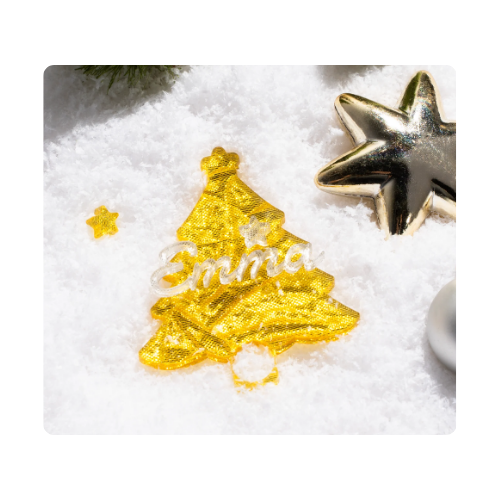
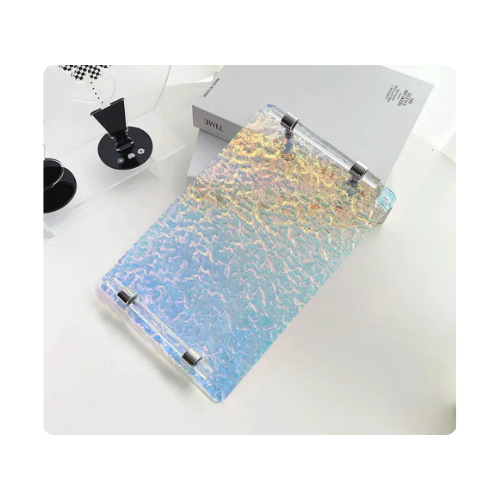
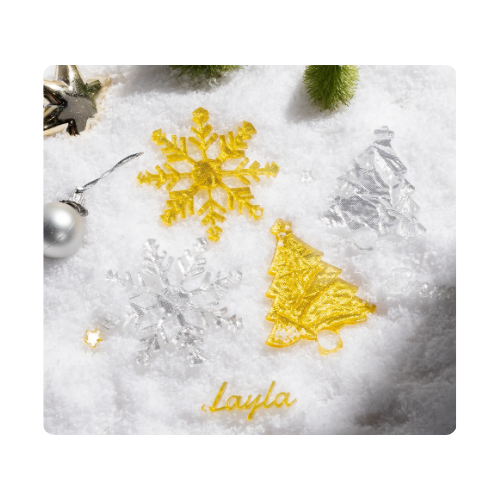
Metallic Mesh ships in gold or silver, 1/8-inch thick, compatible with the P2, Laserbox, and WonderPress for cutting, engraving, and heat bending. Clear Iridescent ships in five colorways, including striped and water-ripple iridescent finishes, red, and blue, at the same thickness and machine compatibility, with one engraving restriction worth noting.
Where Metallic Mesh Pulls Ahead
That double-sided quality matters more than it sounds. Projects like keychains, ornaments, or two-sided pendants rely on both faces looking intentional, not just the front. Mesh acrylic’s consistent finish on both sides removes a design constraint that flatter or single-sided materials tend to quietly impose on a project.
Jigsaw delivers ten pieces in one shape and one color, built specifically around its puzzle-piece concept, best friend or couple sets where two interlocking pieces complete a matched design. That higher piece count per pack suits a shop planning to sell jigsaw pairs regularly rather than mixed one-off orders.
Where Clear Iridescent Pulls Ahead
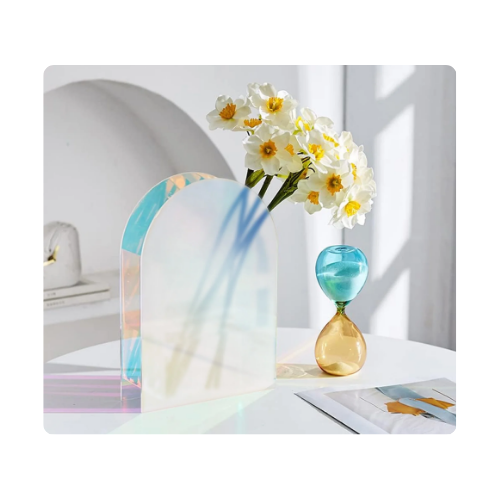
Clear iridescent wins decisively on variety, offering five distinct colorways against mesh’s two, giving shops more room to match a client’s specific aesthetic or seasonal theme. The water-ripple and striped iridescent finishes in particular create a shifting, almost holographic effect that mesh’s flat metallic texture can’t replicate.
The catch: while all five colors cut cleanly, only the blue film striped and blue film water ripple versions are rated for engraving. Red, blue, and the frosted iridescent option are cut-only, so a shop planning engraved designs needs to check colorway compatibility before committing a design to production.
Cutting vs Engraving: The Decision That Actually Matters
If a project is purely cut, a silhouette, a stand, a laser-cut ornament, both materials perform equally well across every available colorway, making the choice purely aesthetic. Mesh delivers a metal-look finish, while iridescent options deliver color-shifting transparency, and either works without any processing limitations getting in the way.
If a project requires engraving, the decision narrows fast. Metallic mesh keeps both its colors fully engravable, while clear iridescent limits engraving to two of its five options. A shop planning an engraved iridescent piece should default to the striped or water-ripple colorways specifically to avoid a processing dead end.
Heat Bending and Dimensional Projects
Both sheets support heat bending, opening the door to curved stands, dimensional signage, or wrapped enclosures rather than flat cutouts alone. Metallic mesh’s uniform reflective texture holds its look consistently through a bend, since there’s no directional color shift to distort once the sheet curves under heat.
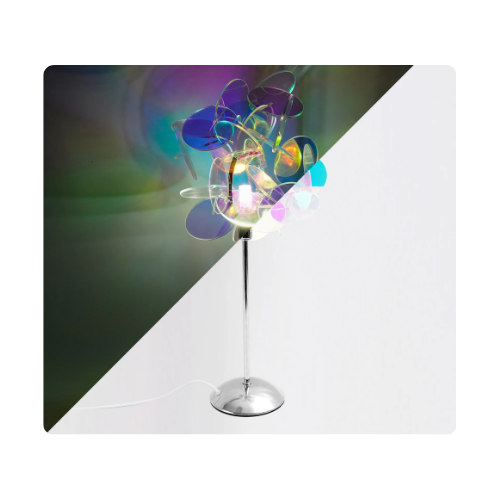
Clear iridescent behaves differently under a bend. Because its color-shift effect depends on viewing angle, a curved piece can produce a more dramatic, ever-changing effect as light hits different points along the curve, which some shops treat as a selling point rather than a limitation worth avoiding.
Pricing at Scale: Which One Costs Less to Stock
At the base three-pack price, mesh costs $14.99 against iridescent’s $16.99, a gap that persists through every bulk tier. At the 51-plus unit level, mesh drops to $10.49 per pack while iridescent settles at $11.89, meaning a shop stocking both at volume pays a consistent premium for the iridescent option.
That $1.40 per-pack gap at top-tier bulk pricing adds up quickly for shops ordering in volume, particularly if the extra colorways and engraving restriction on iridescent don’t actually get used in production. For pure cost efficiency at scale, mesh is the marginally cheaper material to keep in regular stock.
Final Verdict: Which Sheet Should You Buy?
For engraved projects needing guaranteed compatibility across every color option, metallic mesh is the safer, slightly cheaper choice, with a customer-verified reputation for clean double-sided cuts and no warping. It’s the more predictable material to build a repeatable product line around without checking colorway restrictions each time.
For projects that are primarily cut rather than engraved, or where the shifting iridescent effect is specifically the selling point, clear iridescent’s wider color range justifies its higher price. The visual effect it produces simply isn’t something metallic mesh’s reflective finish can replicate, restrictions aside.
Between a material built for consistency and one built for visual range, xTool has stocked two premium acrylic options that solve different problems rather than competing head-to-head. Match the sheet to your process, cutting versus engraving, before you match it to the color you like best.
